

I’ve had a deeply uncomfortable relationship with the word “no” throughout my life – especially in the work environment. To me, the word “no” had an extremely negative connotation. By just saying the word, it subconsciously signified that I was a difficult person to work with and not taking my job seriously. I thought that people who said it at work were not “team players” and less likely to succeed. Little did I know that those same people were sometimes the smartest people in the room!
What I know now that I didn’t know then was that “no” can be an empowering word and a chance to get your work-life balance back toward a place where you feel more in control. Speaking it doesn’t show weakness – but rather a confidence in your own priorities and capabilities.
At Corporate Path Leadership, we hear time and again the frustrations that stem from lack of time to accomplish important tasks at work. The reasons?
- Too many hours per week spent in meetings
- Too many emails/DMs to keep up with
- Too many emergency, or just-in-time requests throughout the day
While we understand and agree with these frustrations, the one thing missing from these conversations about lack of time is the word “no.” People don’t say no to these meeting requests, emails, and emergency projects. When we ask them why, the answer always comes back to wanting to help the team, the organization, etc., and the importance of being seen as a good team player – or not having a choice.
So how do you break this vicious cycle?
Our advice is to focus on identifying what really matters, and then learning to use “no” in a positive manner that helps all parties. Here are the steps to achieve it.
STEP ONE: Brainstorm Goals
Think of your company goals, team goals and personal work goals for the next 6 months.
STEP TWO: Map Out Key Projects and Required Tasks
Identify your work actions and projects that directly relate to the company, team, and personal goals listed above.
TIP: These actions may be existing work in progress items, or upcoming actions that have not yet started.
STEP THREE: Get Organized
Cross reference this action and project list with your meeting schedule, time spent addressing email, and current project list. Make a note of any items that do not relate to work actions, as well as projects that directly relate to company, team, and personal goals.
STEP FOUR: Set Priorities for Your Time
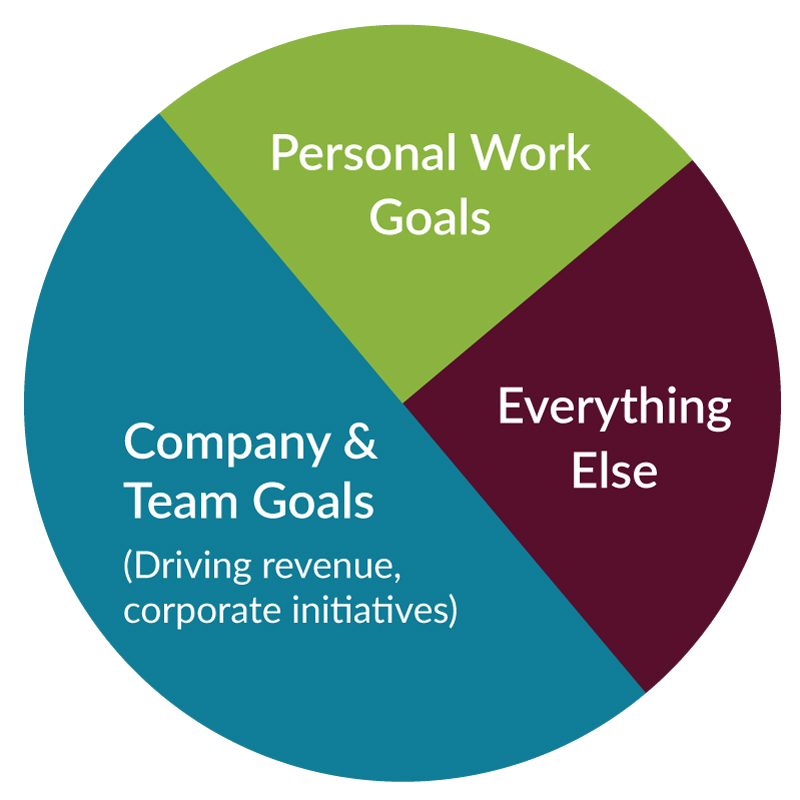
Use a litmus test to determine your approximate time allocation. As a rule of thumb it should be:
- 50% of your time spent on company and team goals (such as driving revenue, corporate initiatives, etc.)
- 25% of your time spent on personal work goals
- That leaves only 25% of your time allocated to everything else
STEP FIVE: Identify Requests That Don’t Align With Your Goals
If your existing meeting schedule and to-do list is more than 25% dedicated to activities that do not roll up to work/team/personal goals, then you need to determine how to say “no” to some of these activities. The way to do this in a positive manner is to simply communicate where your priorities need to be right now, and why you need to delay or stop working on some projects that do not match to those goals.
If you are still leery of “no,” consider how the following examples of a positive “no” could work in your situation, or be modified:
- Tell a meeting organizer that you cannot attend an hourly meeting each week on an event that is not matched with your list of priorities. Offer to attend once a month, or maybe the first 10 minutes of the meeting to see if there are key actions related to you.
- Respond to an email request for help on a non-priority project by saying something like “That sounds like an interesting idea. I don’t have time right now to add that to my plate, but I may have room in 30/60/90 days. Can we circle back then?”
- Respond to an emergency request with “I understand the urgency. I have two other critical projects that take priority over this request. If you can wait until <insert timing here>, I can help out. Otherwise, I’ll have to ask that you seek assistance from someone else.”
TIP: Remember, saying “no” becomes much easier and positive when you have a reason behind it. If you are in a position to offer another solution, that also shows your willingness to still be a team player.
So where are you on the use of “no” spectrum at work?
We’d love to hear from you and learn more about where you are succeeding (or struggling) with using this word. If you need personal help at getting better with “no,” feel free to reach out to Corporate Path Leadership and take a 90-day challenge to make it part of your new work behaviors in a positive manner. We’re happy to help!
Contact Us Today
We make it easy to jump start success. Simply contact us and share your current team challenge or need, and we’ll respond with program ideas to innovate your team performance.